Nutrition
What vegetarian office lunch works without a microwave?
Choose a meal you enjoy cold, then plan how to keep its perishable ingredients chilled from home to lunch. A chickpea box, paneer wrap or curd-and-idli box can suit that arrangement. Without reliable cooling, choose foods whose labels permit storage outside a fridge. Check storage before choosing the recipe.
What should you check at the office first?
Check refrigeration and the eating time before choosing a cold packed meal. Include the trip between your kitchen and the office fridge.
Ask whether the fridge works, whether you can use it on arrival and whether your lunch container fits. “We have a fridge” can mean another floor that you cannot reach during a shift. Put access in the plan rather than assuming it.
Write down the time you leave home and your usual lunch time. Include a delayed lunch if a meeting or handover can move it.
Can you keep perishables chilled from packing to lunch?
You can arrange reliable cooling
- Follow preparation and storage instructions.
- Insulated bag with at least two frozen cold sources.
- Refrigerate on arrival; keep chilled until lunch.
Choose your chilled box after these checks.
You cannot arrange reliable cooling
- Choose foods labelled for unrefrigerated storage.
- Check instructions after opening or preparation.
- Check what the food needs at work, such as boiling water or utensils.
Check suitable bread, whole fruit and shelf-stable foods.
USDA-based planning diagram. Two cold sources do not certify a particular number of hours. Check labels and the full commute-to-lunch interval.
The Nutrition topic covers food planning and logging. Use the calorie-target guide if you need to set food quantities for a personal target. The example boxes here are combinations to adapt, without a promise about calories, protein or bodyweight.
How long must an 08:00 packed lunch stay cold?
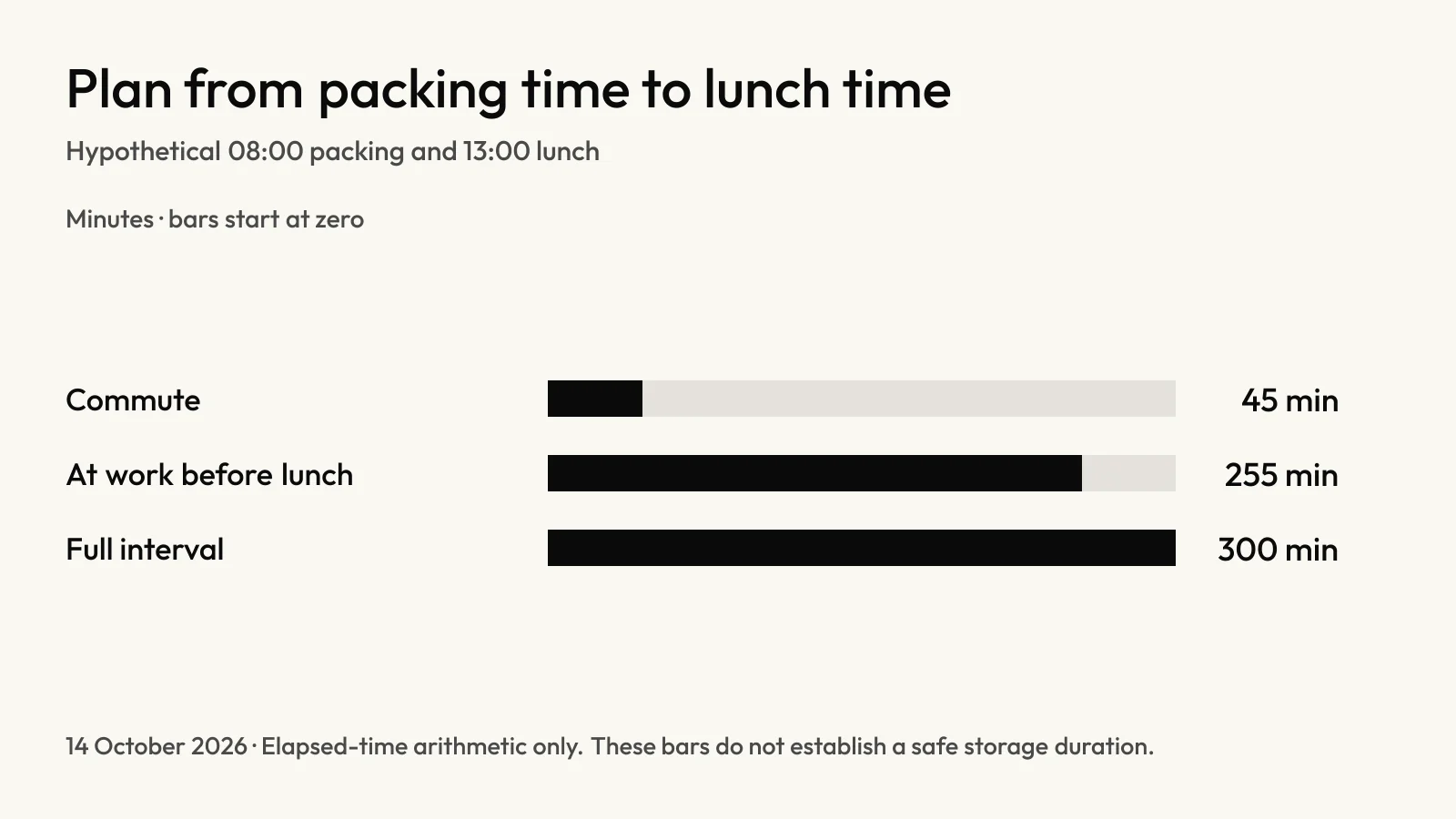
If you pack at 08:00 and eat at 13:00, plan for the full five-hour interval. Cooling at work does not account for the commute on its own.
| Stage | Example time | Duration |
|---|---|---|
| Travel after packing | 08:00–08:45 | 45 min |
| At work before lunch | 08:45–13:00 | 255 min |
| Full interval | 08:00–13:00 | 300 min |
This original example does not measure food temperature or establish that a particular bag stays cold for five hours. A delayed 14:00 lunch adds another hour to the arrangement you need to check.
USDA’s packed-lunch guidance calls for a refrigerator at 4.4°C or below and at least two cold sources around perishable food in an insulated bag: two frozen gel packs, or one with a frozen juice box or bottle of water, frozen overnight and placed above and below the food. Refrigerate at work on arrival, leaving the bag open so the cold air reaches the food. It limits room-temperature exposure to two hours, or one hour above 32.2°C; a bus, car or desk without air conditioning can pass that on a hot day in much of India. Pack only what you will eat, and discard leftovers after lunch rather than carrying them home. Those limits do not certify an arbitrary five-hour lunch bag. Keep perishables cold through both stages, and choose another arrangement if you cannot do that.
Which vegetarian boxes can you plan to eat cold?
Choose ingredients you like cold and can prepare under their cooking and storage instructions. These three examples assume a reliable chilled arrangement.
| Box | Illustrative quantities | Packing decision |
|---|---|---|
| Chickpeas and chapatis | 150 g cooked, drained chickpeas; 100 g cucumber; 75 g tomato; 2 chapatis | Pack the chickpea-and-cut-vegetable mix as a chilled dish |
| Paneer wrap | 100 g prepared paneer; 75 g cooked peppers; 2 chapatis | Keep the prepared filling chilled; assemble as preferred |
| Curd and idli | 200 g curd; 3 fully cooked idlis; 100 g prepared carrots | Keep the curd and prepared box chilled; use a sealed separate pot |
The amounts are menu-planning inputs, not recommended portions. “150 g chickpeas” means cooked and drained weight here; it does not mean 150 g dry pulses. The homemade-meal logging method explains preparation-state and batch-weight records if you want to count the dish.
Try a small portion at home before making it your office lunch. Check whether you enjoy the texture after chilling and whether the container seals. Change the dressing or arrangement to suit your taste while retaining the storage instructions.
For a dairy-free menu, use the separate dairy-free vegetarian meal page. Paneer and curd in this table remain dairy foods; an office-equipment constraint does not imply a dairy restriction.
How should you organise the preparation?
Choose a preparation time, label each container and leave room in the fridge before cooking. Keep the cooking instructions with the recipe you use.
The Food Standards Agency’s chilling guidance says cooked leftovers can be eaten cold if you cook them properly, cool them and refrigerate within two hours. It advises smaller portions in containers for cooling and using leftovers within 48 hours or freezing them. Follow product instructions and any stricter food-specific guidance.
On a hypothetical Tuesday evening, write the preparation date and intended Wednesday lunch on the lid. Mark the cooked or drained weights in your recipe note. Before leaving on Wednesday, take the correct labelled box rather than selecting an unlabelled container from the back of the fridge.
Share the food list with whoever cooks through the meal-plan sharing method. State that you intend to eat the meal cold and describe the cooling arrangement. The cook needs that information before choosing the dish.
What can you choose without a reliable fridge or cold bag?
Choose food that its label permits you to store without refrigeration. Do not apply that permission to an opened or prepared version unless the instructions allow it.
USDA lists whole fruits and vegetables, hard cheese, bread, crackers, peanut butter, jam and pickles among foods that can travel without a cold source. Read each product’s instructions, including after opening. A whole fruit and a cut-fruit container need separate decisions.
You might plan bread or crackers with peanut butter or jam, a whole fruit such as a banana or an apple, and a pickle or a labelled shelf-stable item you enjoy. Check the available quantity against your normal lunch, and bring the utensils needed to open or assemble it. If you want a packaged meal, confirm that the label allows the storage and preparation you can provide.
A product needing boiling water still needs suitable facilities. An unopened shelf-stable pack requiring heating may also fail the office constraint. Read the complete preparation instruction before putting it in your bag.
What should you check before sharing the box?
Check the recipient’s allergies and food rules before choosing ingredients. Keep their portion and container identified.
The Food Standards Agency’s packed-food guidance includes yoghurt, salads and cut produce among foods to keep chilled. It also asks people preparing shared food to check allergies and prevent allergen cross-contamination. Follow medical dietary instructions if a clinician has given them; ask before changing that plan.
For a shared preparation, write both names beside the boxes and tell each person what is inside. An ingredient substitution needs a new check with the recipient. Keep the amount to buy in the grocery-list calculation, and keep the amount you use in the recipe record.
Which sources support this answer?
USDA FSIS supplies the cold-transport and temperature limits. UK Food Standards Agency guidance supports chilled leftovers and packing decisions. The three boxes and five-hour timetable are illustrative planning examples, without calculated nutrition targets.
- USDA Food Safety and Inspection Service. Keeping Bag Lunches Safe. Cold transport, refrigerator temperature, frozen cold sources, leftovers and limits outside refrigeration. Updated 25 July 2025; full page read 14 and 15 October 2026.
- UK Food Standards Agency. How to chill, freeze and defrost food safely. Cooked leftovers, labels and preparation. Published 18 December 2017; live document read 14 October 2026.
- UK Food Standards Agency. Keeping food safe on a picnic. Chilled salads, yoghurt and cut produce; cool bags and allergy checks. Published 11 January 2018; live document read 14 October 2026.
Topic: Packed lunch. Vegetarian office meals selected for the available cooling, transport and eating arrangements.
Liftor is not a doctor and gives no medical advice.